
Met Office
1,000 scientists and a very large computer.
A crew visit to the Met Office blew our minds learning about the complexity of how marine forecasts are produced.
A forecast is made up of three parts – observations of current weather, computer modelling of what will happen next and a large dollop of human interpretation.
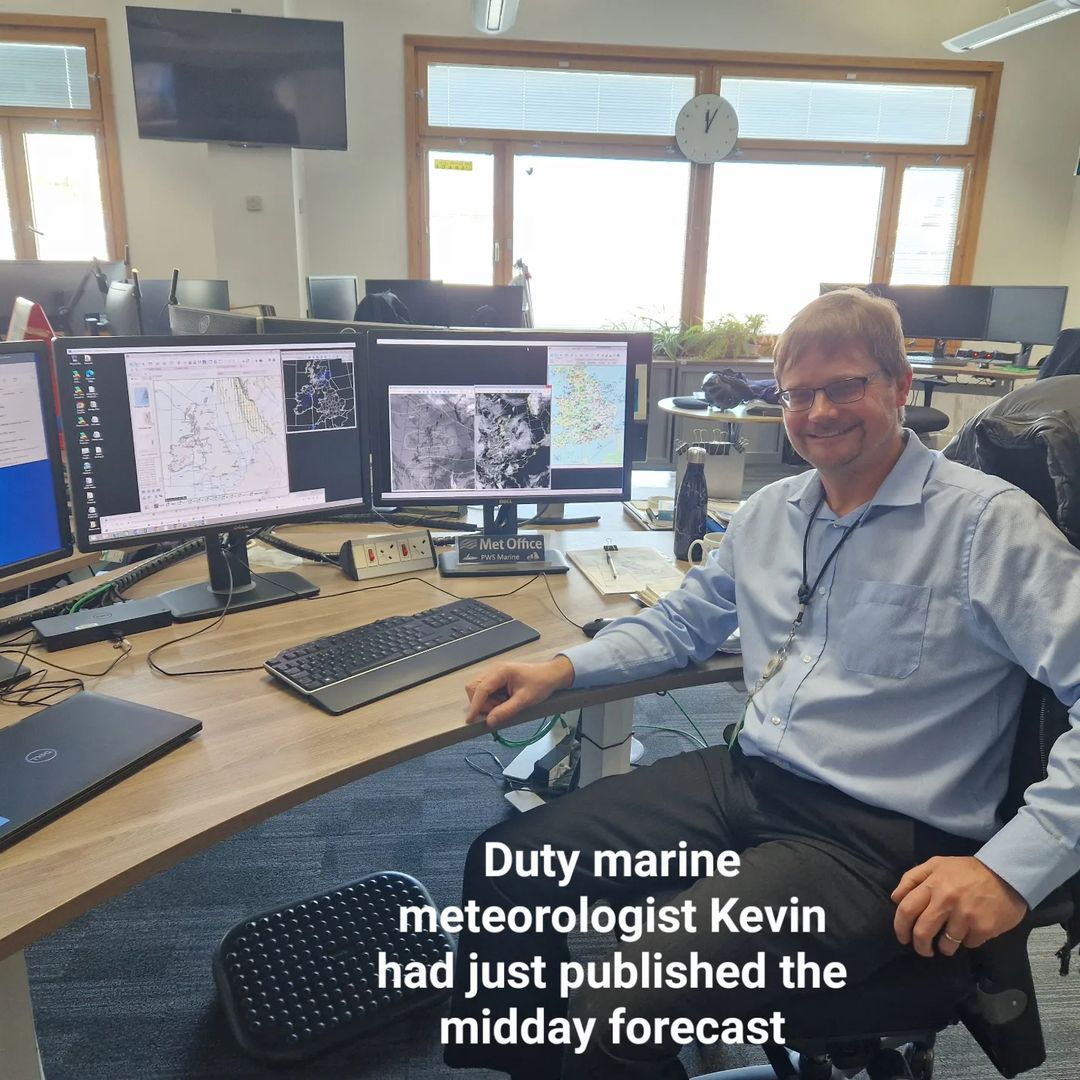
The human interpretation is provided by some extremely bright people.
The photo left shows Kevin who had just published the Midday Shipping Forecast after a 12 hour shift.
All forecasts are approved by a Chief Forecaster who ensures consistency. –
Marine is just a one of the Met Office’s many “customers” – aviation, transport, industry, emergency services, space, defence.
The Met Office even has a unit which deploys on operations with the military.
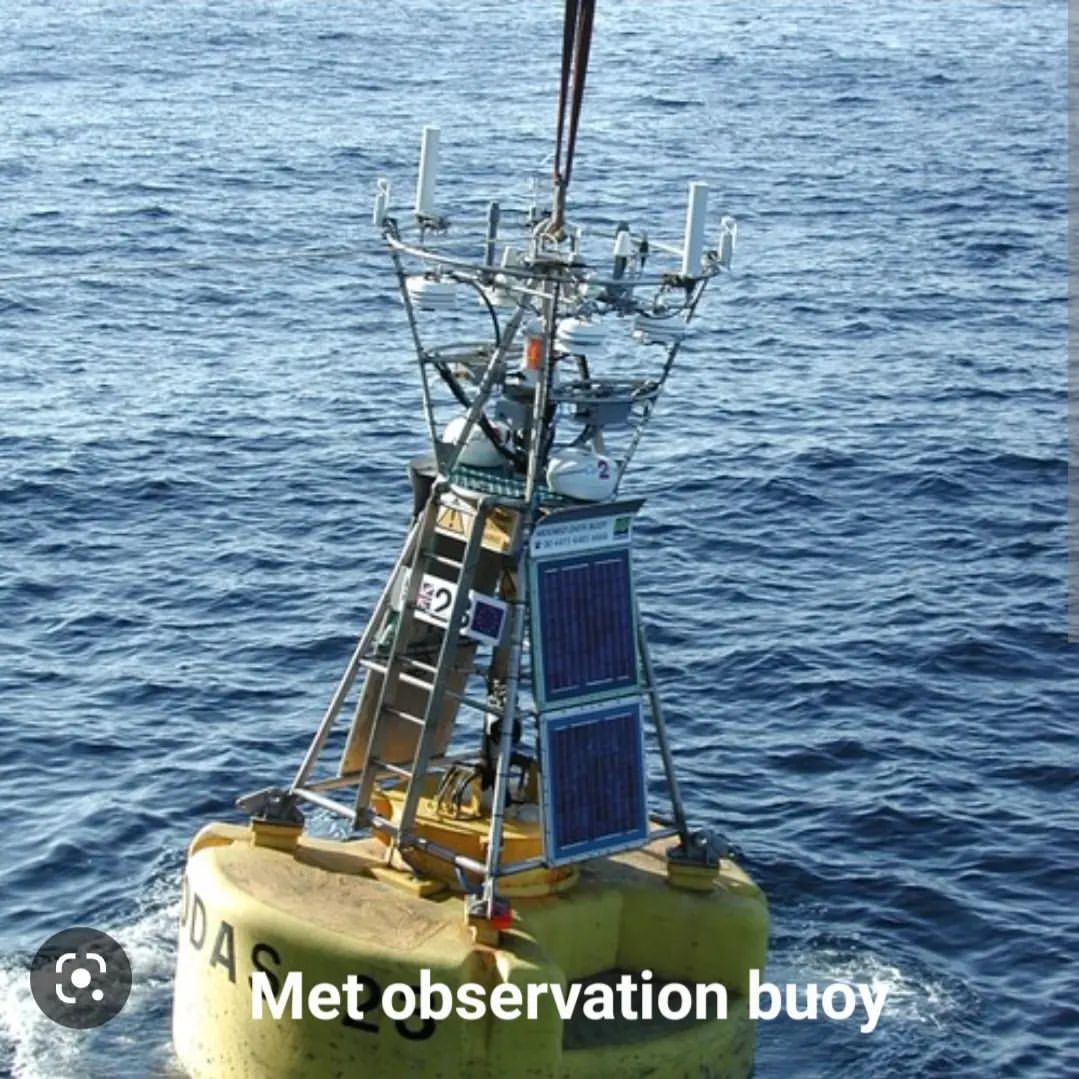
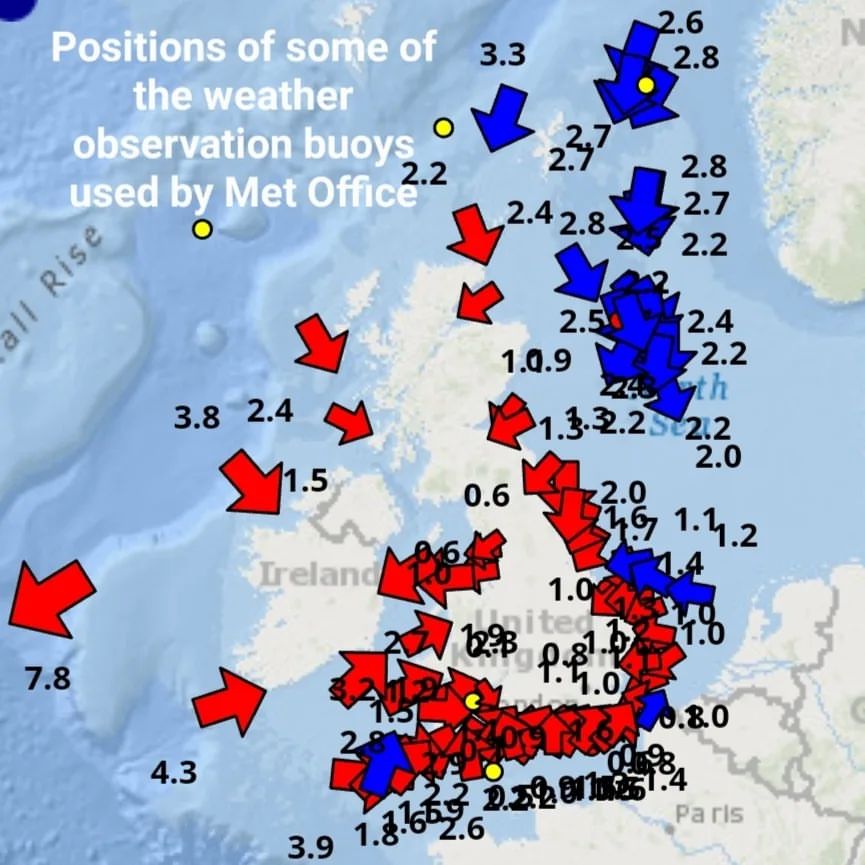
Observations arrive at the Met Office from weather stations on moored buoys, light vessels, offshore platforms, observing ships, drifting buoys around the globe (1,250 of them!) and devices which descend to the seabed.
Air pressure; air temperature; sea temperature; humidity; wind speed, wind direction, wave height, wave period and salinity are measured, delivered and crunched. –
The modelling is produced by a supercomputer which can consume more electricity than the whole of Exeter!
We learnt the weather can be forecasted up to three months ahead, AI is improving accuracy significantly and storm “names” are chosen in turn by UK and Irish meteorologists.
In a presentation about my sailing challenge to some staff we discussed predicting sea fog, and how the Inshore Forecasts could be made more accurate.
After the discussion I was given this solution: “If Mark had a handheld hygropalm on his boat, he’d be able record the air temperature, dew point temperature and humidity. If the dew point temperature is getting close the air temperature and there is a high humidity then fog would be expected.”
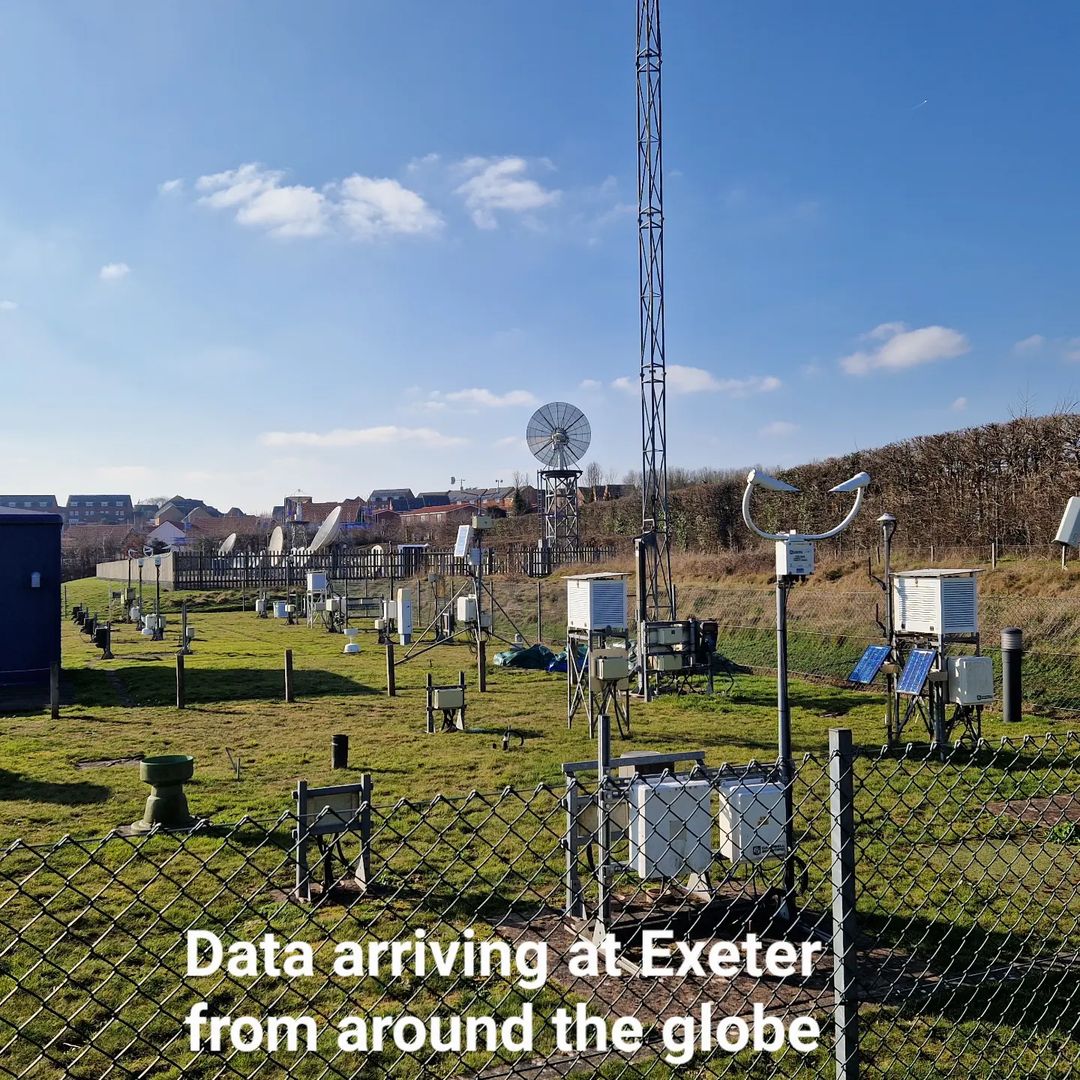
A few of the many instruments that collect data from around the world.
The Met Office also has a beautiful wildflower meadow adjacent to this plot!
Thank you so much to Dr Emily Wallace who hosted us and subsequently came to crew on Good Dog and tested out some marine forecasting live with her colleagues back in Exeter!